By Shaina Hayutin, Coach at CrossFit Newtown
CrossFitters aim to be generalists, not specialists. This is why we run, lift weights, do handstands, row, jump on boxes, work skills on pull up bars, change intensities and time modalities – the list goes on and on. The aim is constantly varied, but that does not mean it’s random. It means training everything equally. Finding that balance can be difficult. This is why returning to the basics is an essential tool.
The CrossFit methodology was formed based on four theories:
- Sickness Wellness Fitness Continuum
- The Hopper
- Three Metabolic Pathways
- 10 General Physical Skills
To learn more, I highly recommend reading the original CrossFit Journal article by Greg Glassman, “What is Fitness.”
To summarize each:
- Sickness Wellness Fitness Continuum: This model demonstrates how the CrossFit Pyramid and prescription aim not just to get people from sick to well, but from well to fit. We want human health markers to reflect individuals who work hard in the gym and in the kitchen. Who pay attention to their physical well-being and have bodies that function optimally in order to live independent, healthy lives with as few prescription medications, injuries, ailments, and aches and pains as possible.
- The Hopper: We want humans to be prepared for the unknown and unknowable. This means that you can accomplish whatever movement is thrown into the workout for the day, in some form or fashion. Bigger than that though, we want to create humans who can handle the challenges and chaos of the world. Being prepared for whatever the gym throws your way will better equip you to handle whatever life may throw your way.
- Three Metabolic Pathways: It’s quite simple: we train long, medium, and short capacities. This is why Fran is as vital as a 5k run. One is not better than the other. They are both essential to general physical preparedness [GPP]. We are greedy. We aim to be good at a breadth of modalities because we know it equates to a more durable lifespan.
- 10 General Physical Skills: This is what we shall dive into today…
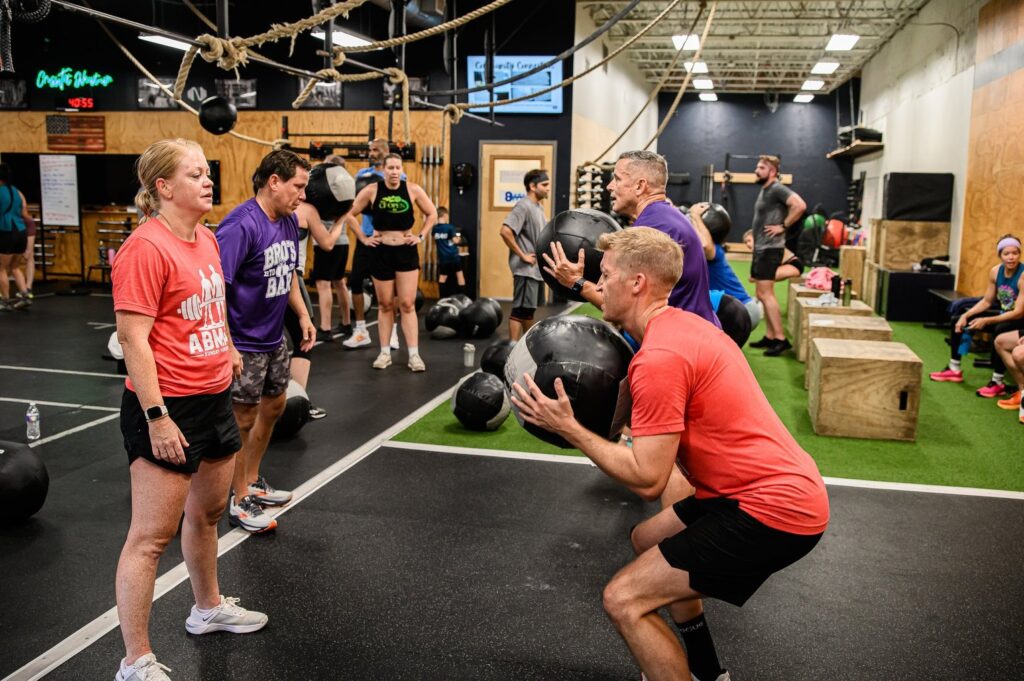
When athletes come to class, often I hear them talk about their levels of strength, cardiovascular abilities and how fast (speed) they can accomplish a workout. Less often, I hear the terms stamina, power, and coordination discussed from an athlete; more so it comes from a coach’s mouth. Flexibility and mobility definitely get thrown around, but usually only in the context of a warm up or cool down. And least often, do I hear athletes talk about their agility, balance and accuracy abilities.
If the aim is to create the most well-rounded individual, then we must focus on all 10 General Physical Skills equally – aka the 10 aforementioned bolded words. This is both the beauty and difficulty of programming the CrossFit methodology as originally intended. The aim is simple. The execution is often missed. Human bias, veering off the original path, and getting distracted by trends and noise, contribute to missing the mark. In the end, pointing the blame elsewhere really doesn’t matter. What matters is that you’re checking back in with yourself to see how well-rounded you truly are.
This is why keeping score matters. Not to compete with others or claim first place on a silly leaderboard, but to track your own progress again and again (and again). Because it’s not about getting PR’s [personal records] for the rest of your life. That is unrealistic. It’s about remaining balanced in your training for the long-haul.
Measurable, observable, repeatable.
I’ve been doing CrossFit now for over 13 years now. I may never see a PR again in my life. And I truly do not care. I’ve preached for years that what matters is consistency. Showing up for yourself so you can better show up for the people in your life who matter is what matters. Personally, over the past two years, due to health and circumstance, I’ve been forced to shift. My body and health have changed and it’s caused me to reassess my own relationship with CrossFit. It’s been trying, uncomfortable, and frustrating. But it’s become crystal clear that what I’ve been preaching for over a decade is truly all that matters. In the pursuit of balance, with life’s inevitable ups and downs, you need to be ready to shift again (and again). So I continue to show up to the gym, and it looks quite different than it did 2, 5, 10 years ago. The root remains the same: focus on your health and be consistent.
Humans are so good at taking something simple and elegant and overcomplicating it. Look at history, religion, or something as silly as Instagram. Instagram’s original intent was to share photos with your friends and family. Now it’s turned into influencer central and ads on ads on ads. The robots will take over the world…I digress…
My point remains: It’s vital to continue to go back to the beginning. Another fantastic article by Greg Glassman I highly recommend, “Fundamentals, Virtuosity, and Mastery.” To go off memory and paraphrase, “When you think you’ve mastered something, go back to the basics, this time paying closer attention.”
Call me old school, but to understand how this beautiful methodology was created in the first place is vital. Use it as your North Star while also learning from the over 25 years of human experience of trial and error since the methodology came into existence.
To move our bodies is a privilege. And to continue to work on moving them well and with intention is forever the aim. Results are cool, but the process is lifelong. Stay classy CrossFit Newtown.
Shaina Hayutin is a CrossFit Coach and Content writer at CrossFit Newtown in Newtown, PA. With a Degree in Journalism, a Level 2 CrossFit Coach, a Healthy Steps Nutrition Coach, and over a decade of experience in the fitness industry, she emphasizes the critical role that community plays in achieving optimal fitness results while maintaining long-term health and wellness.